Before the current crisis, I hosted a board game night at my college, ran numerous monthly game days, organized board game marathons for charity (Extra Life shoutout!), and had a regular Sunday game day with my family (the only gaming that I've done since the outbreak). Besides that, I'm the type of person that always likes to have games with him in case the opportunity to play materializes. To that end, the trunk of my car was (is) always a mess of board game boxes and carrying bags. At some point, I decided to neaten things up somewhat and took those games from the trunk (and back seat, and front seat, and under the seats) and returned them to my shelves at home and the college. The clutter was gone, but I still wanted to have some games at my fingertips for when the occassions arose that I could get people around a table. I decided to see how much gaming I could get in a box portable enough to keep around without my car looking like it was inhabited by a nerdy hobo. To that end, I picked up a photo storage box from my local Walmart (seen below). The box contained 16 4x6 plastic boxes with hinged lids that latched. To mazimize the use of space and amount of fun, I made the criteria for inclusion 1) games that I played regularly and loved and 2) games that would take up no more than one of the 4 x 6 boxes. My only other criteria as I built the box originally and tweaked it these last few months was variety. I tried to cover as many genres and gaming situations as I could without violating the first two rules. Here is my current list with a bit of commentary on why I chose to put them in the box.
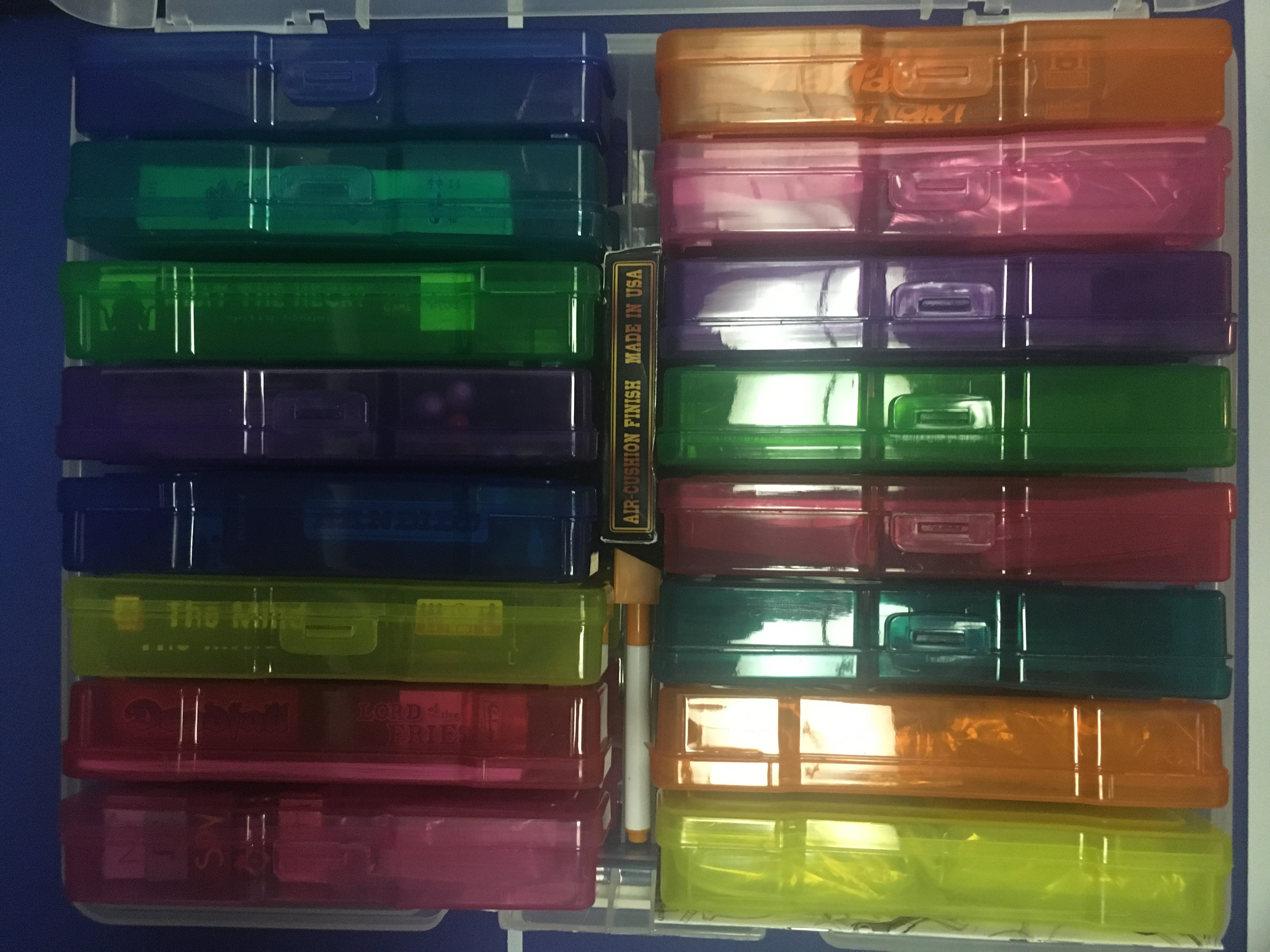 My bug out box
1. Hanabi
Hanabi is one of my favorite co-ops. It doesn't feel like any other game. It works equally well from 2 to 5 players, and it is popular with both my game group and my family. It was a no-brainer.
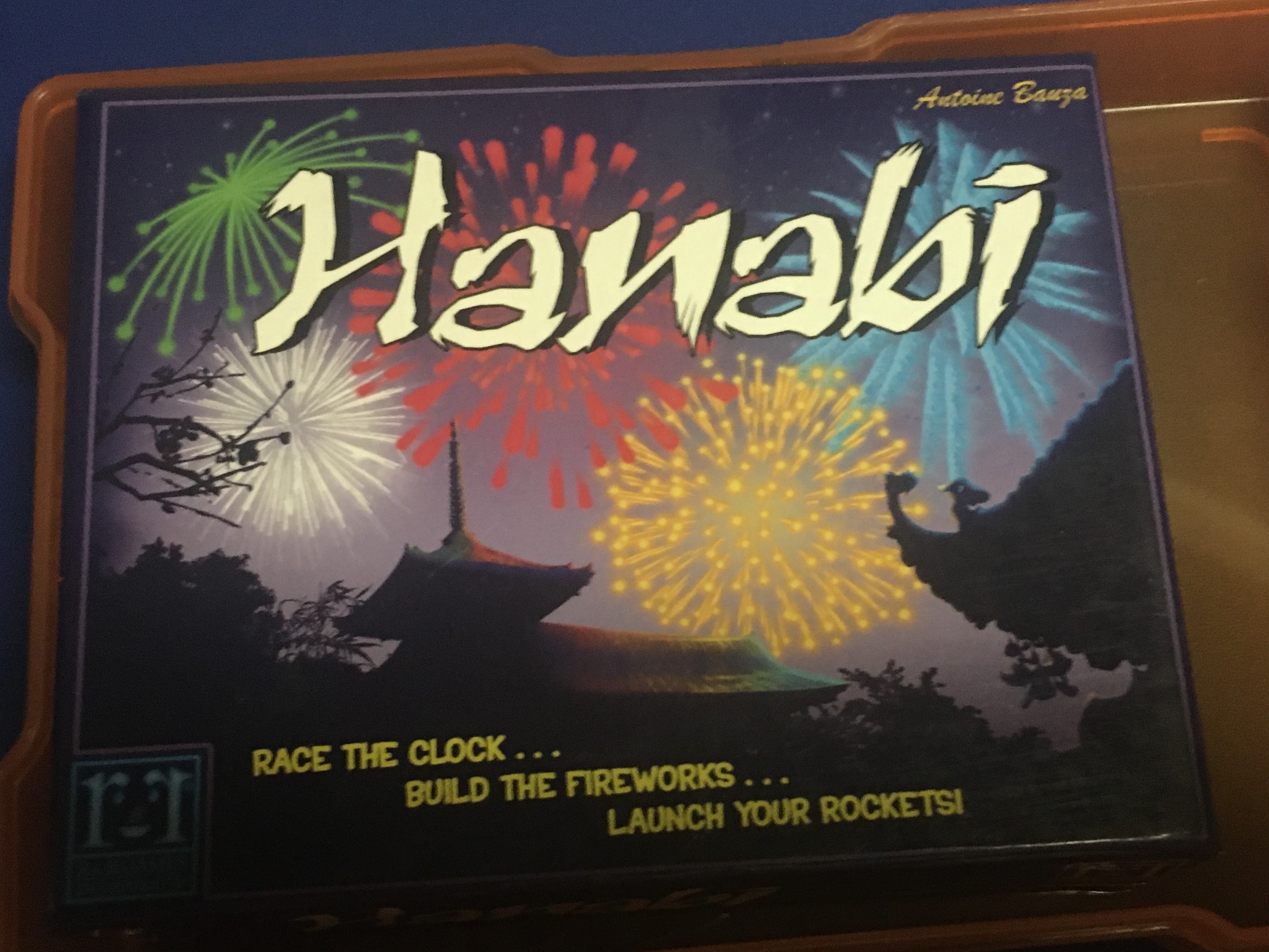 Hanabi by Antoine Bauza
2. A Fake Artist Goes to New York
Fake Artist is a wonderful party game from Oink games that plays like Spyfall crossed with Pictionary. Players are given a category and an object to draw--except for the fake artist who is only given the category. Each player takes turns adding one line to the drawing. This happens twice and then players attempt to determine who the fake artist is. Very simple. Very funny.
3. Rhino Hero
Rhino Hero fills two roles in the box--it is a kid's game and a dexterity game. It shares a box with Fake Artist, so its portability is also a huge factor. To be fair, this game has not been played since I built the box and it is on the cutting block at the moment. Still, it is a fun game that has given us lots of joy over the years.
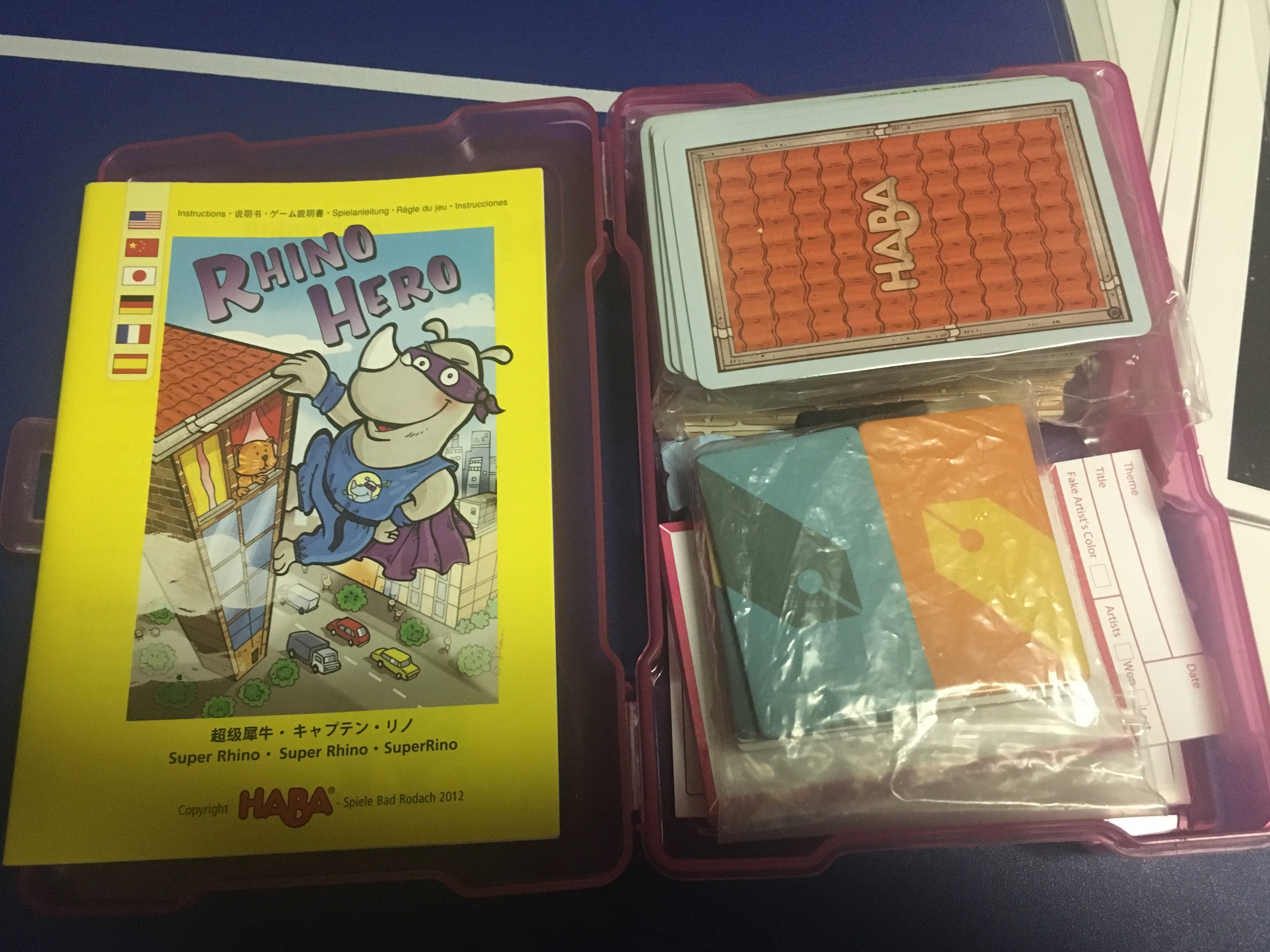 Rhino Hero and A Fake Artist Goes to New York share a box
4. Star Realms: Frontiers
Star Realms is an excellent multi-player deck builder (my favorite deck builder that is also ultra portable), but it is also an excellent solo game. I often pull out a solo game when staying at a hotel after the wife and kids have gone to bed.
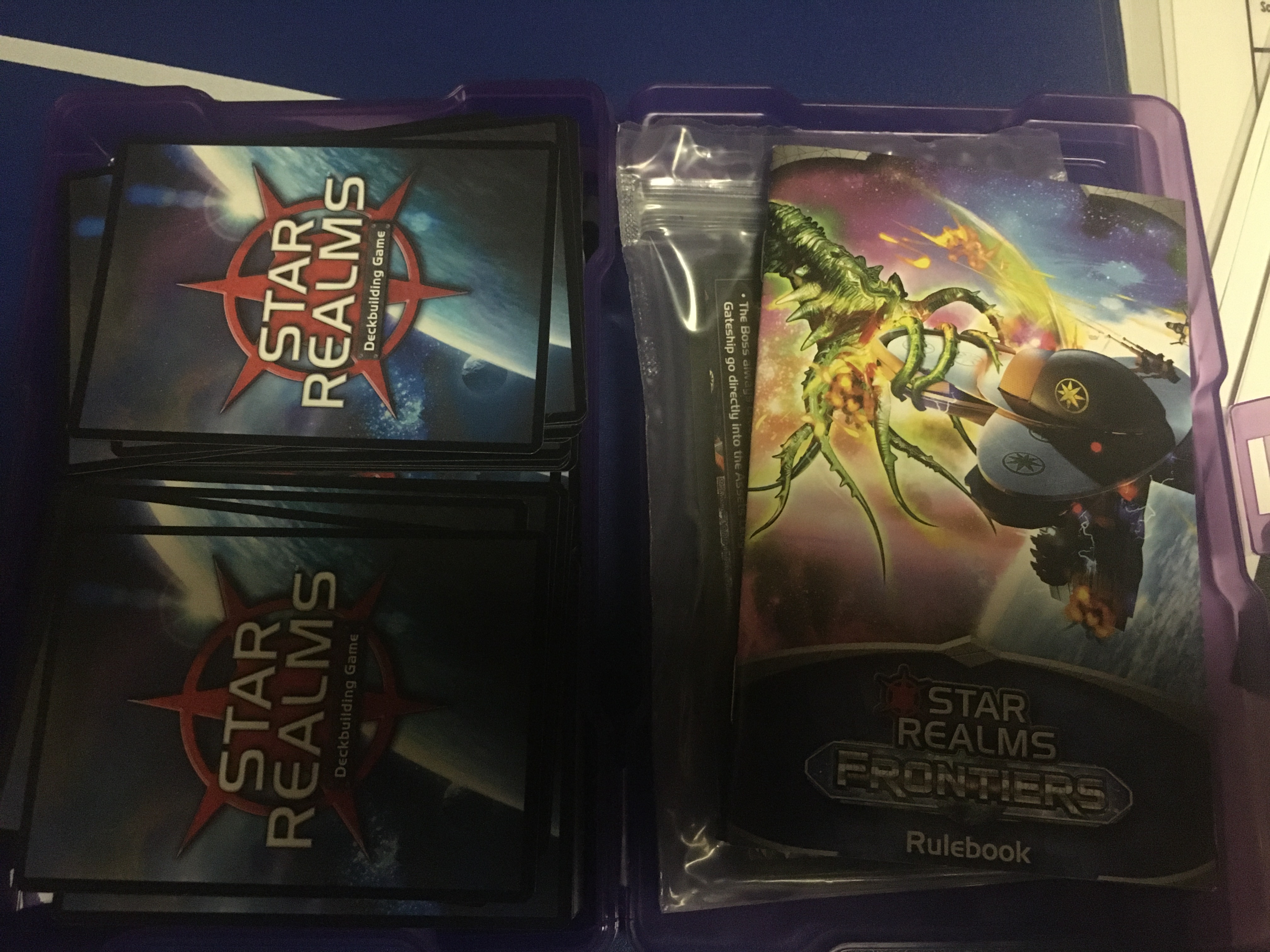 Star Realms: Frontiers is a lot of game in a small box
5. The Crew
The Crew is another co-op game, and it is my favorite new card game since The Mind. Unlike The Mind, players of The Crew have a lot of control over whether they win or lose and success is usually possible no matter how bad the card draw. I come from a family of trick-taking sharks and it has been a blast to test our skills against The Crew's systems. This is high on the list of games I want to play more when our game group can resume playing.
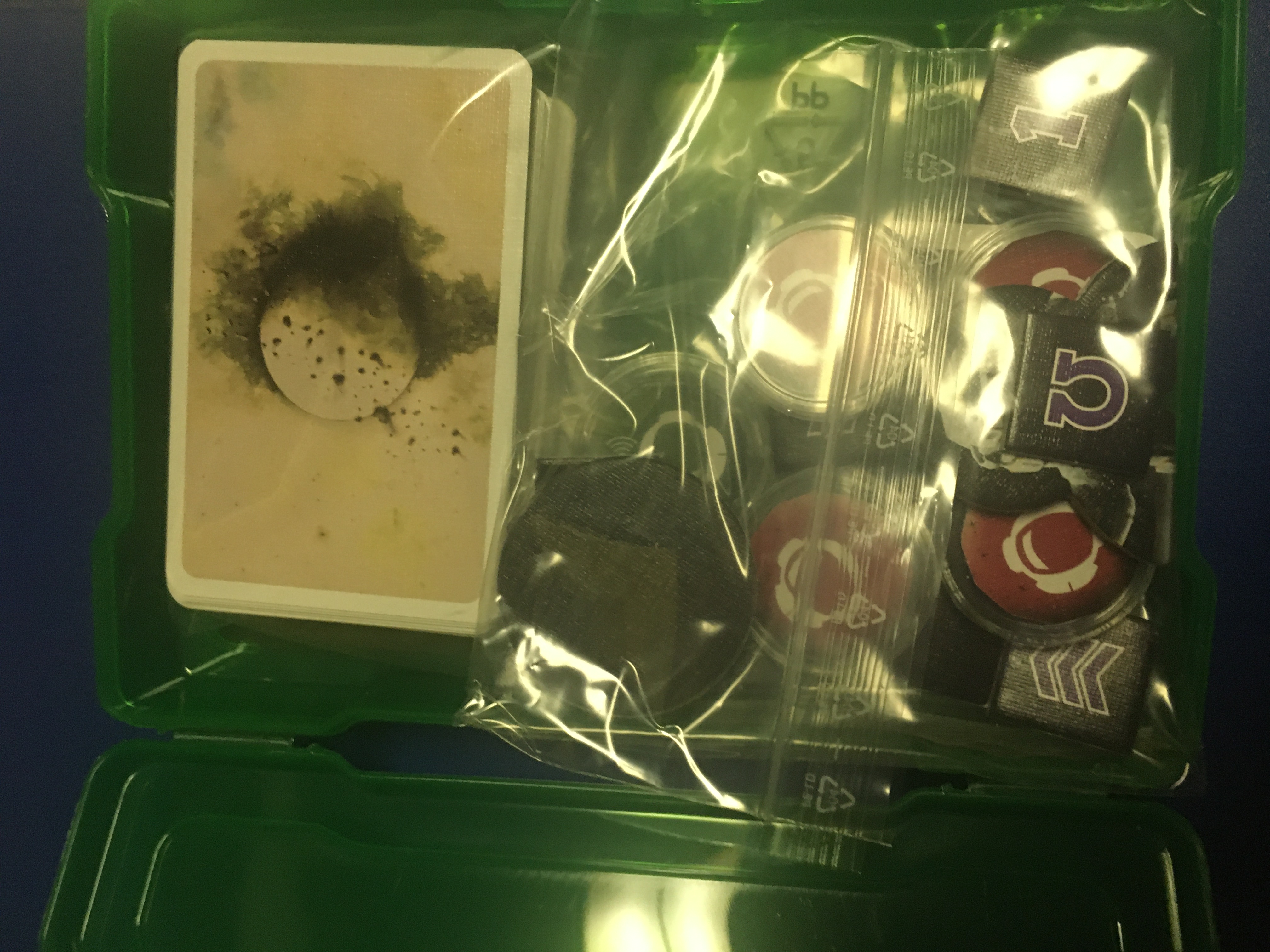 How has no one done a cooperative trick-taking game before this?
6. Guillotine
Guillotine is the most-played filler in my collection. I'm on my third copy. The game is random as it could be, has take-that elements that turn some people off in other games, and has a particularly non-family-friendly theme. Still, it is a game that always makes us laugh. In this box, it serves as one of the "beer and pretzels" games--games that we can play and still have conversations and enjoy ourselves without having to think too much about what is going on.
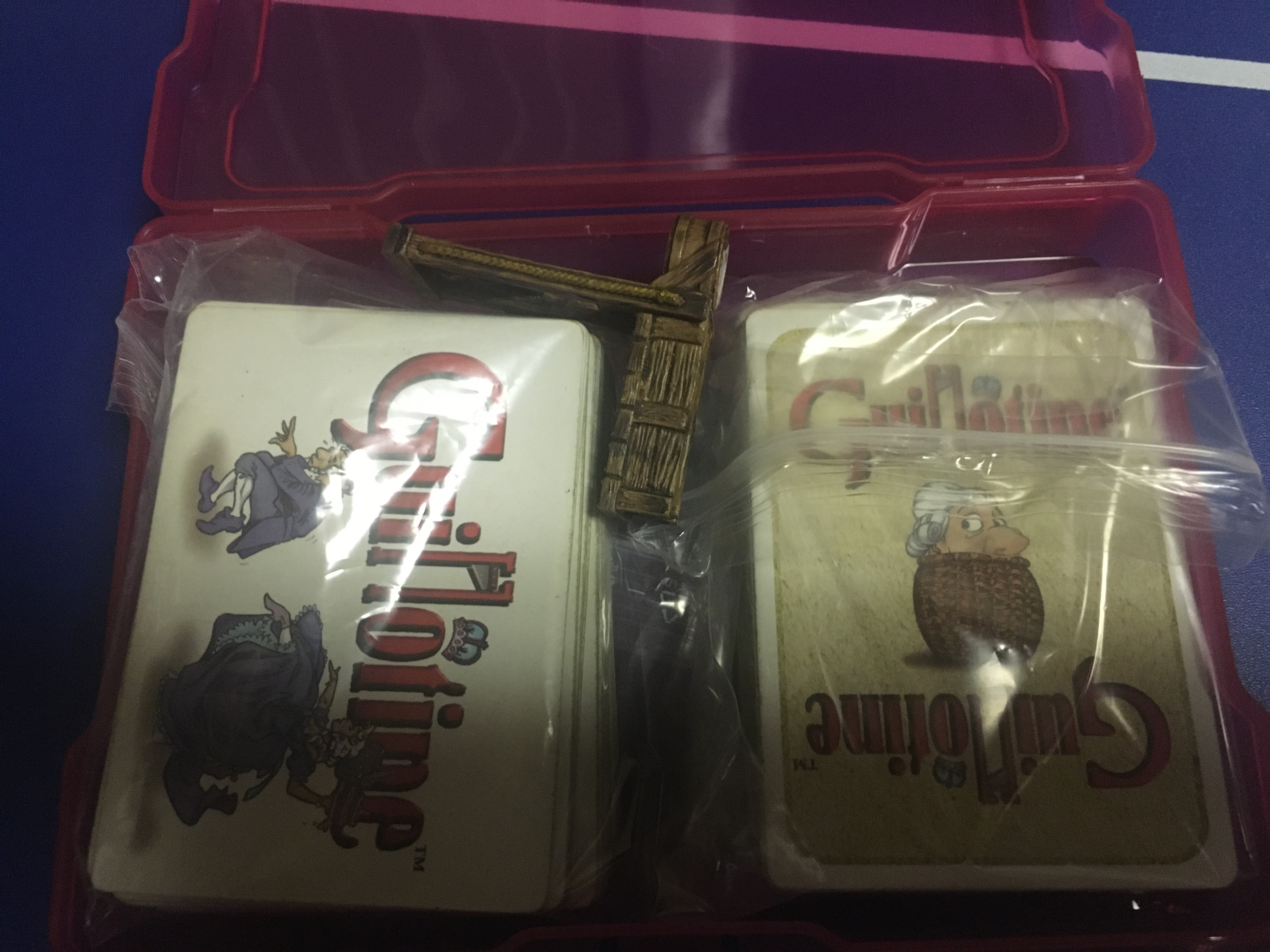 Guillotine features art from M:TG artist Quentin Hoover
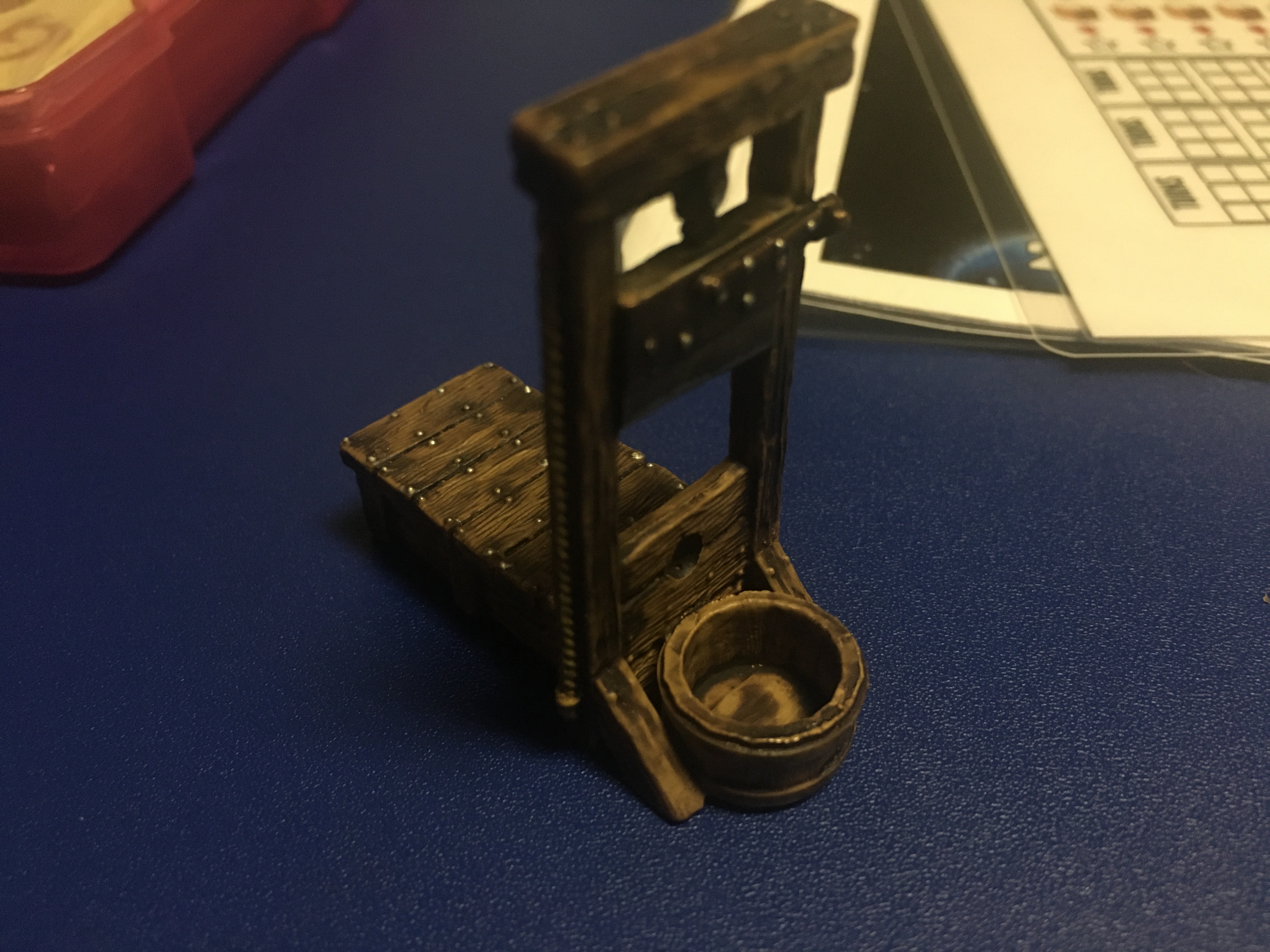 I love the game so much I had to paint up a guillotine
7. Werewords
Werewords is a mashup between 20 Questions and One Night Ultimate Werewolf that works very well. The game has a app for mobile devices, but it can be played without it. Werewords often works in situations where other social deductions games do not. The 20 Question elements are familiar enough to draw in non gamers while providing plenty of game play for gamers. Of all the games in the box, this is probably the one that the most people have ordered from Amazon on the phone during games.
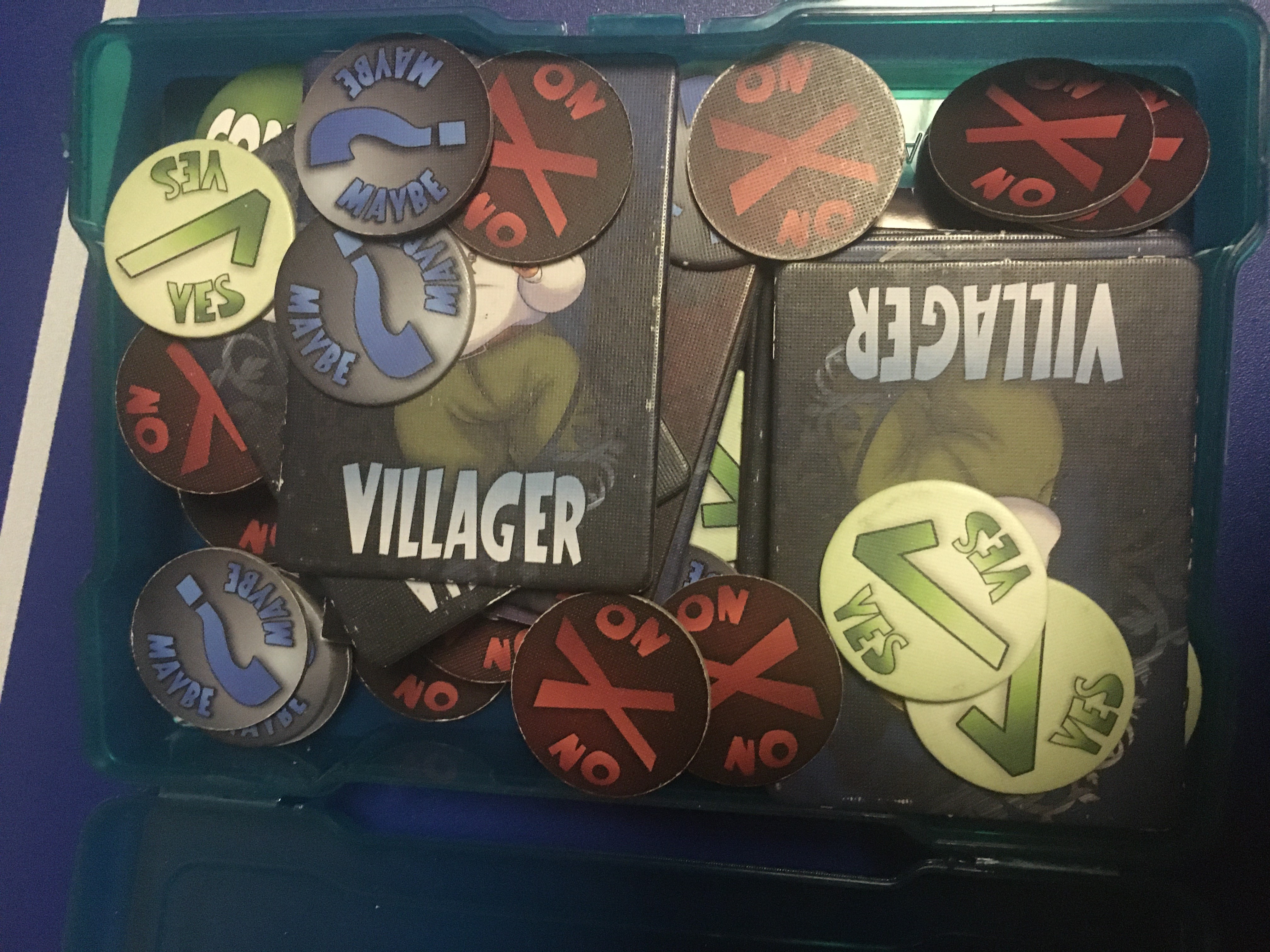 Werewords was beat by Just One in the 2018 SDJ, but Just One won't fit in the box!
8. Combo Fighter
Alrighty, here's my first rule-breaker. I'm a little obsessed with the card-game-that-simulates-fighting-games genre. Currently, Combo Fighter is my favorite of those and I'm trying to get at least one of my kids to fall in love with it. It is a rule breaker because even though I could put two decks in one box and be ready to roll, I actually have four decks spread over two boxes (the humanity!).
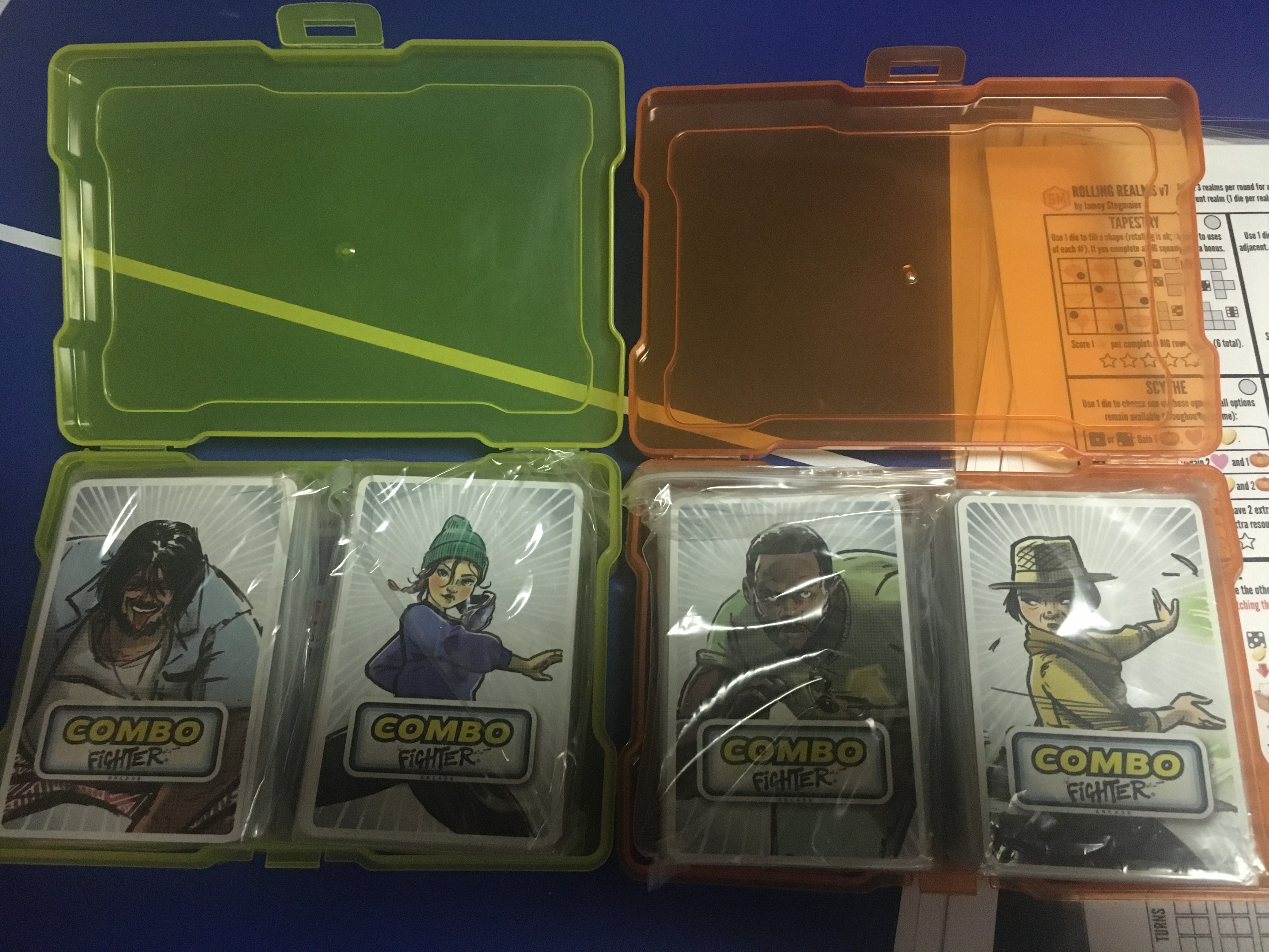 The Arcade Fighting Game card game market is flooded with great games.
9. Don't Mess With Cthulhu
Don't Mess With Cthulhu is my favorite social deduction game and there isn't a close second. In the game, players try to either play all of the Elder Signs (the investigators) or reveal Cthulhu (the cultists). This is done by revealing cards in front of other players who have revealed something about their hands going into the round. This game forces everyone to lie at one point or another, and it is a beautiful thing to watch unfold.
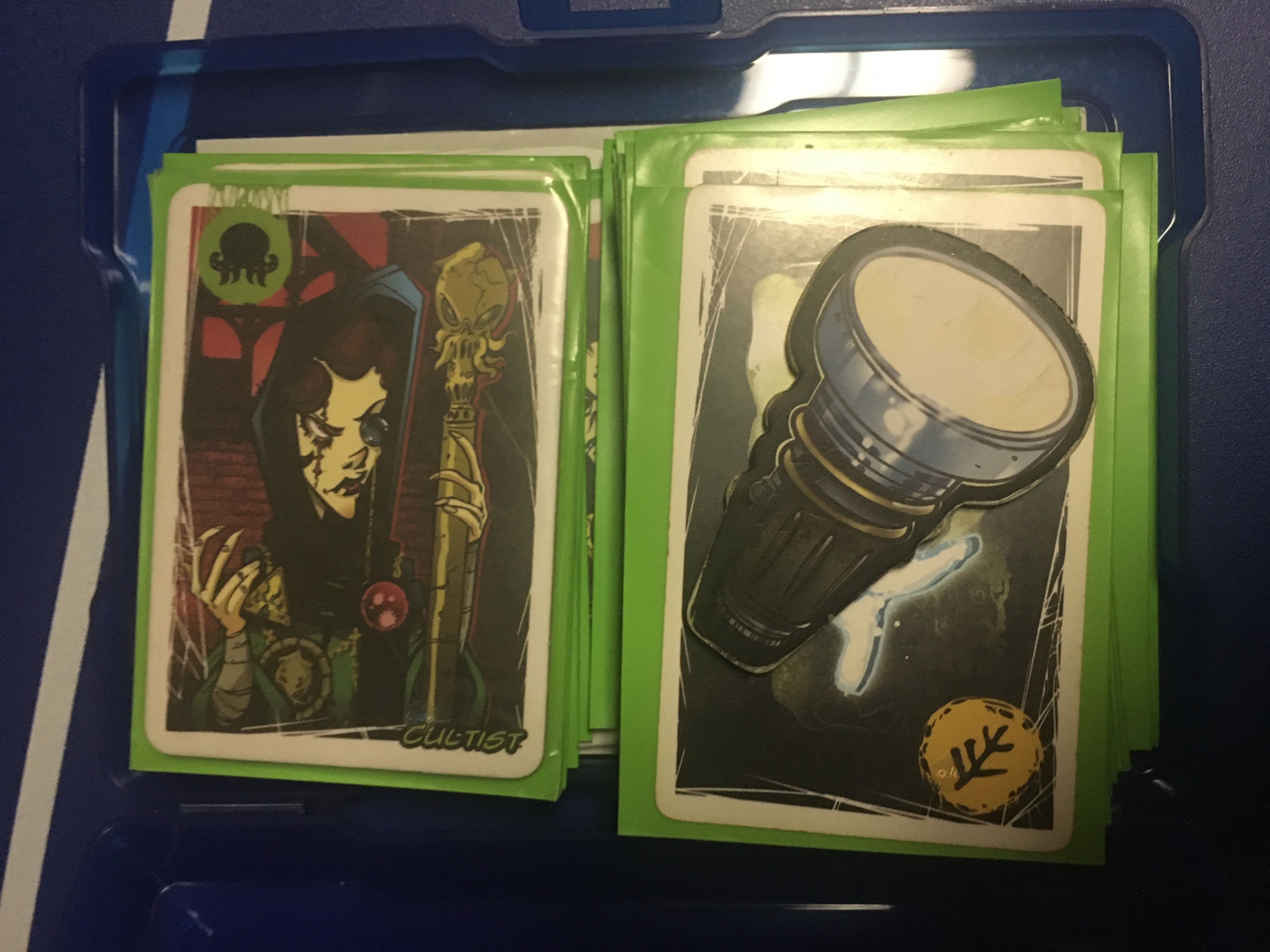 I have played over 200 hands of Don't Mess with Cthulhu since I discovered it
10. Mamma Mia
Mamma Mia is a overlooked Uwe Rosenberg game with a bit of a memory element and a brutal level of interaction. It is downright infuriating when another player slips a pizza order on top of the pile that is going to use just enough of the ingredients you need to fulfill your order.
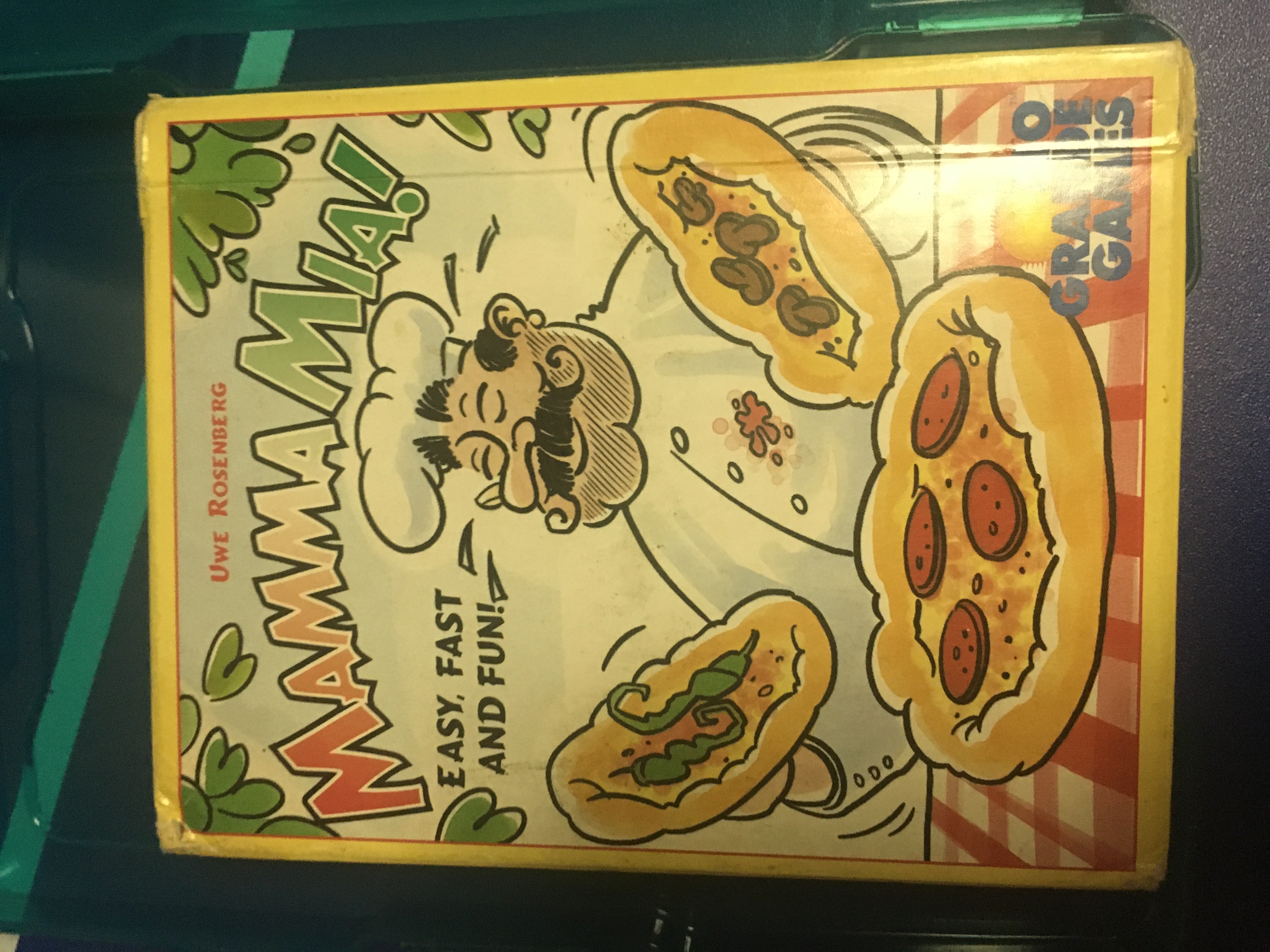 UWe was making great games long before Agricola--they were just a lot smaller
11. What the Heck
What the Heck is the current release of the classic Alex Randolph game that I've mostly played under the name Raj and is probably best known as Beat the Buzzard. This is a simple, fast auction game with each player having exactly the same hand of cards to bid with and the game coming down to how you use them to bid for the items that are flipped up randomly. For Sale takes this basic gameplay and improves it with a follow-up round that makes use of the cards one in the first round, but What the Heck is a bit faster and, for this project, more portable.
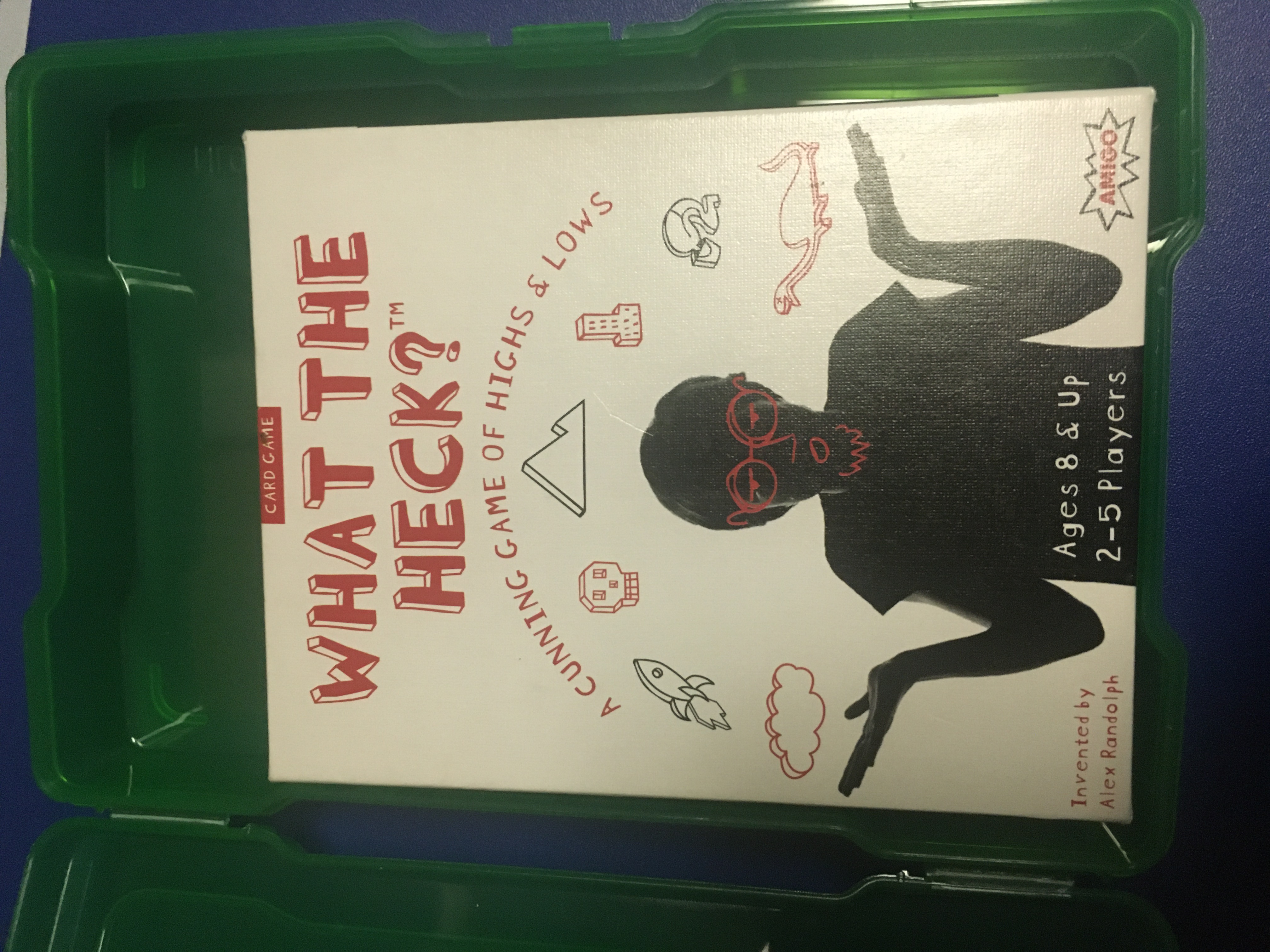 Raj is a better looking edition and I'll likely switch them out soon
12. Silver and Gold
Silver and Gold is a relatively new "flip and write" that has player filling cards in using Tetris-shaped patterns revealed on cards. It is just the right level of simplicity that anyone can learn and complexity that rewards smart play.
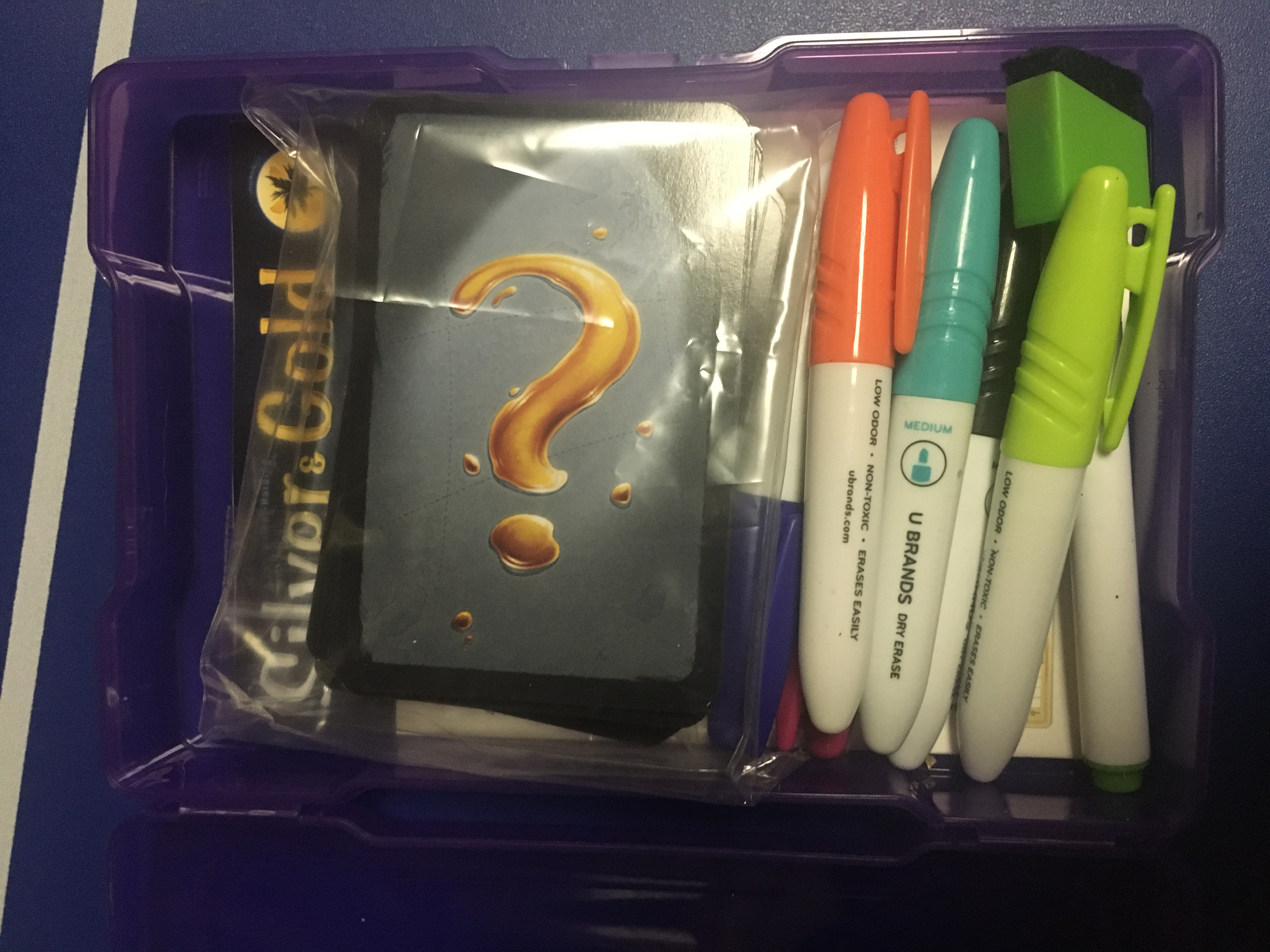 I wish this was a better solo game
13. Bandido
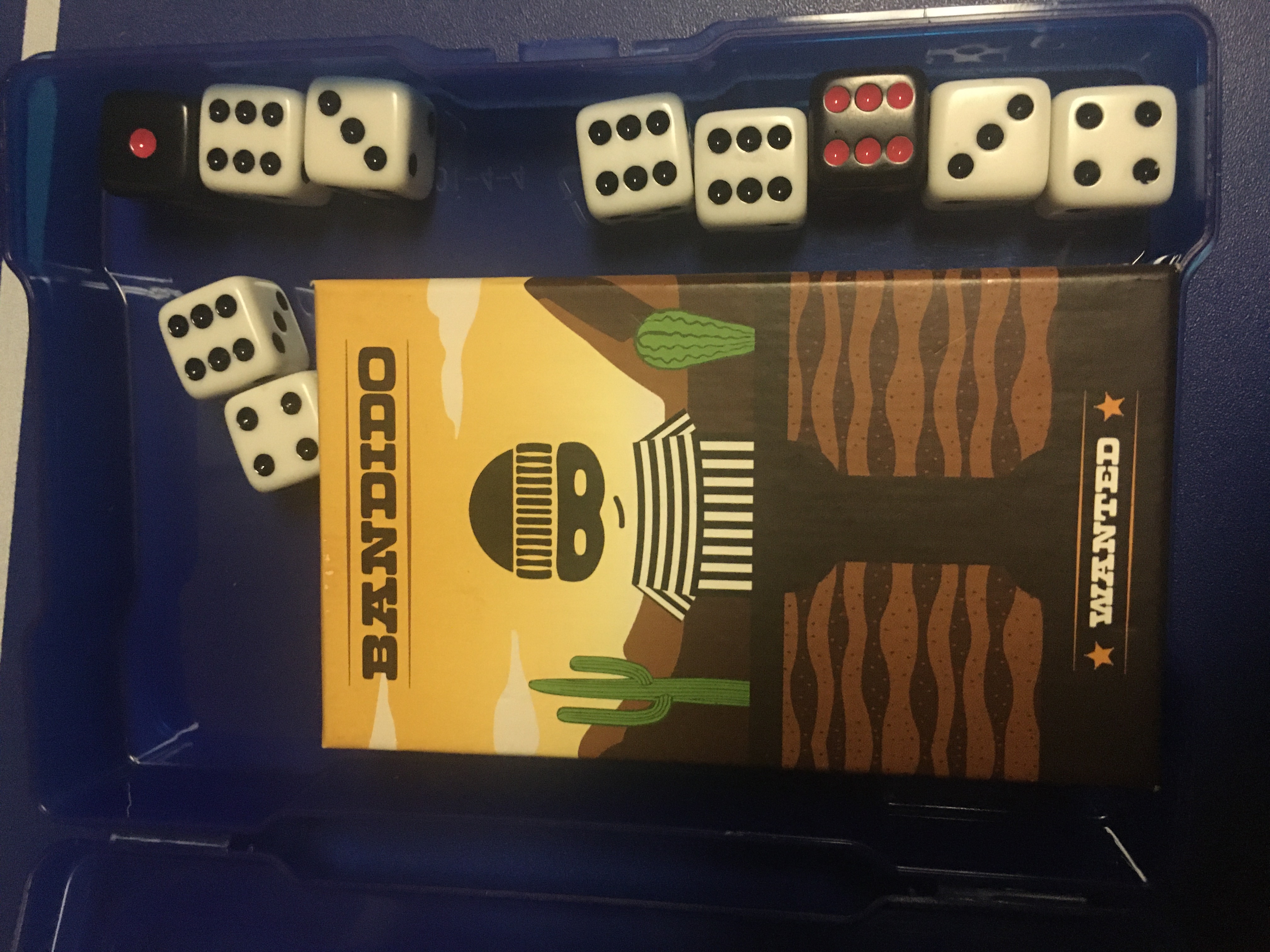
Bandido is a simple tile-laying game from Helvetiq that comes in a box roughly the size of those used by Oink games. In Bandido, players attempt to lay cards in a way that will close off all of the exits for the titular bandido. This is the co-operative beer and pretzels companion to Guillotine--another game that allows for catching up with friends while playing but still has enough game play to be rewarding.
Note: Helvetiq released a Covid19-themed pnp of Bandido for free!
14. The Mind
The Mind is certainly divisive-with a number of accusations online that it isn't even a game or that it is fundementally broken. I think that both groups are insane. The Mind is an amazing and unique co-op that is incredibly rewarding when played well. Is it fragile? Yes. Do a lot of people cheat when they play it? Also, yes. Does that make it any less fun for my group? Nope. I'll play The Mind any time it is put on the table. I imported a copy when it was first released in Germany and it is one of the best purchases I've ever made.
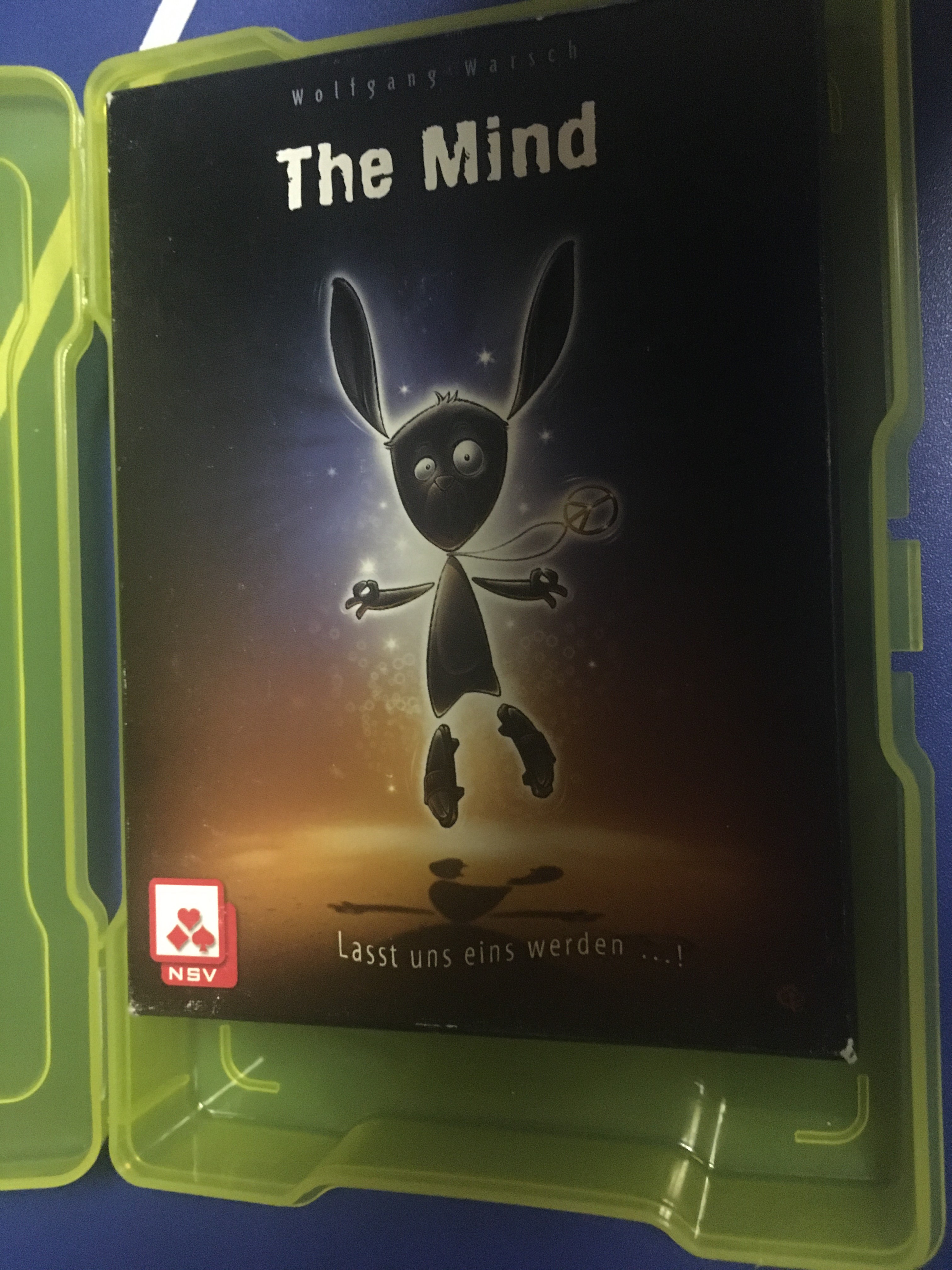 People who cheat at co-ops are monsters
15. Lord of the Fries
This is one of two Cheapass Games in my box. I love James Ernest designs and think he is among the most underrated designers in the industry. Lord of the Fries isn't, however, one of his best designs. It is a silly, extremely random card game with a goofy theme (zombies running restaurants). Still, I have fun every time I play it, and it has been a hit almost every time I have introduced it to new groups. This one is on the chopping block, but I'm holding out for another goofy, thematic game that will work for as many situations as Lord of the Fries does.
16. Pairs/Deadfall
The deck I have says Deadfall, but it is a Pairs deck like any other and can be used to play dozens of games from the Deluxe Pairs book, which I keep in the same box. For the record, Deadfall is the best of the half-dozen "Liar's Dice but with cards" games that I've played (Knizia's Icarus is a close second).
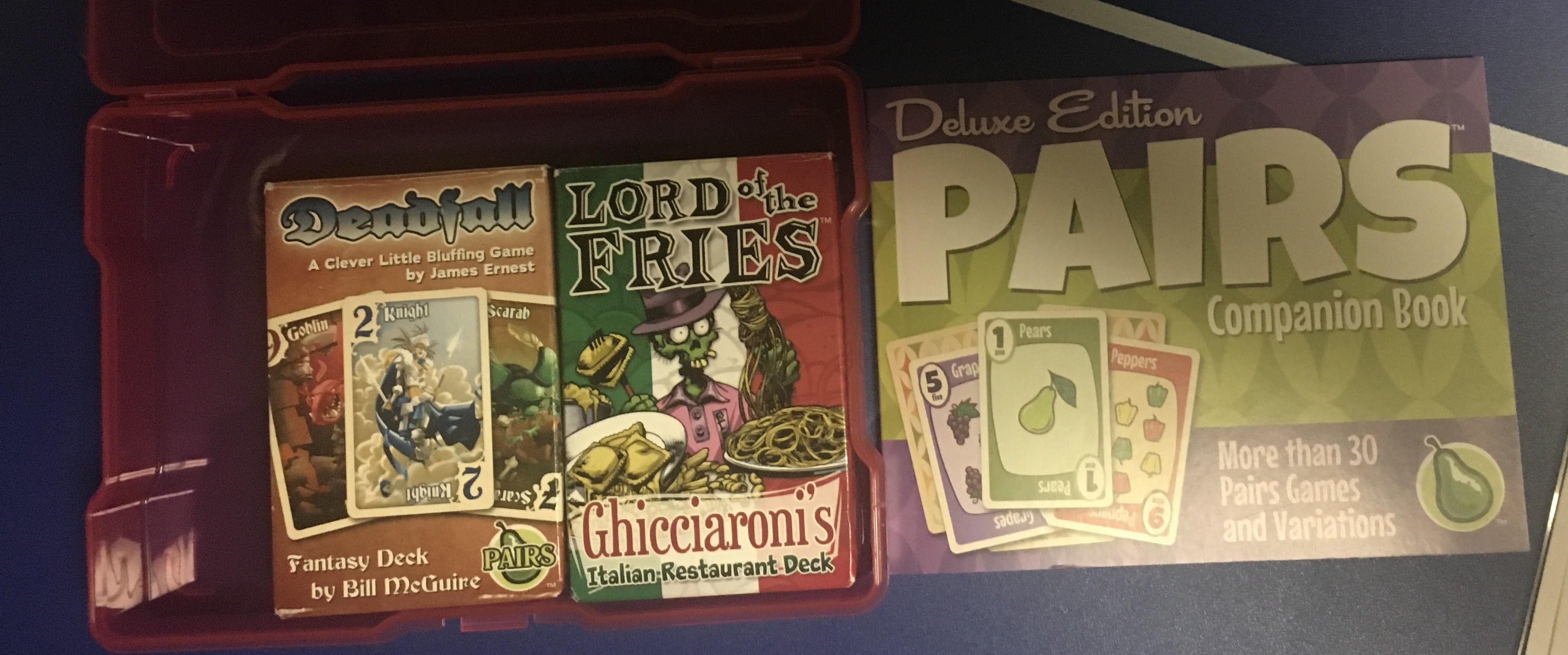 I've been a fan of Cheapass games since my broke-ass college days
17. Frank's Zoo
I love climbing games. Frank's Zoo is one of the best and is criminally unknown. This Doris Matthäus, Frank Nestel design features amazing art by Matthaus. Each card has an adorable animal and the "climbing" involves working your way up the food chain to bigger and bigger animals. The game has a clever emerging partnership and it is a great introduction to climbing games. Would I rather be playing Tichu? Yes, but Tichu might as well be Bridge it is so dependent on regular partners and opponents of equal skill. Frank's Zoo gives me some of the joy of Tichu in a more user-friendly package.
18-24. My Pack O Game collection
I love Chris Handy's Pack O Game designs and they are perfect for a project like this as they are the size of a pack of gum and "pack" plenty of game play into that small box. I especially like this final box because I can remove it from the bigger box and take it into nearly any environment (and have seven games in my coat pocket). At some point I'll likely have more of these in the box, but for now I have seven of my favorites: Nut, Spy, Orc, SHH, Hue, Dig, and Lie. It occurs to me now that BUS should also be in the box but appears to be missing :(. Anyway, of these DIG feels the most like a full board game experience. SHH is a great co-op word game (a category otherwise missing from my bug out box). Lie is another Liar's Dice variant and could probably be left out, but there isn't really any reason to given its tiny size. SPY is a cool deduction game that involves some hand management and memory. Hue is a tile-laying game reminiscent of Knizia's Ingenious but in a much smaller package. It is the one game in the Pack O Game series that I'd prefer to have in a less protable deluxe edition.
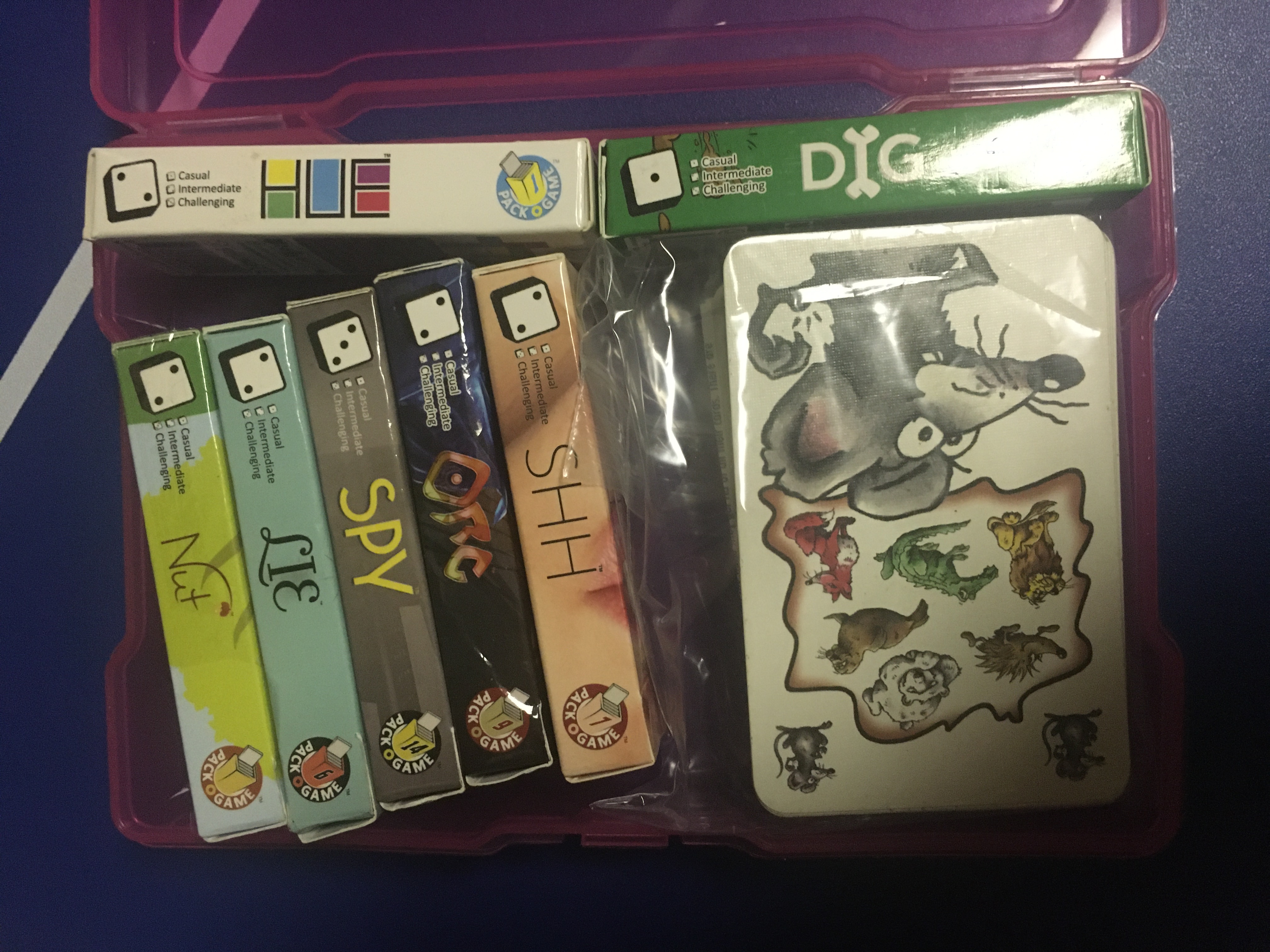 8 Games, 1 Box--the Internet sensation
And, that is it. Twenty-four games in 16 little boxes (and all in one bigger box). My question for you is this--do you have a gaming bug out bag, and, if so, what is in it?

 Friday, January 7, 2022 at 11:26PM